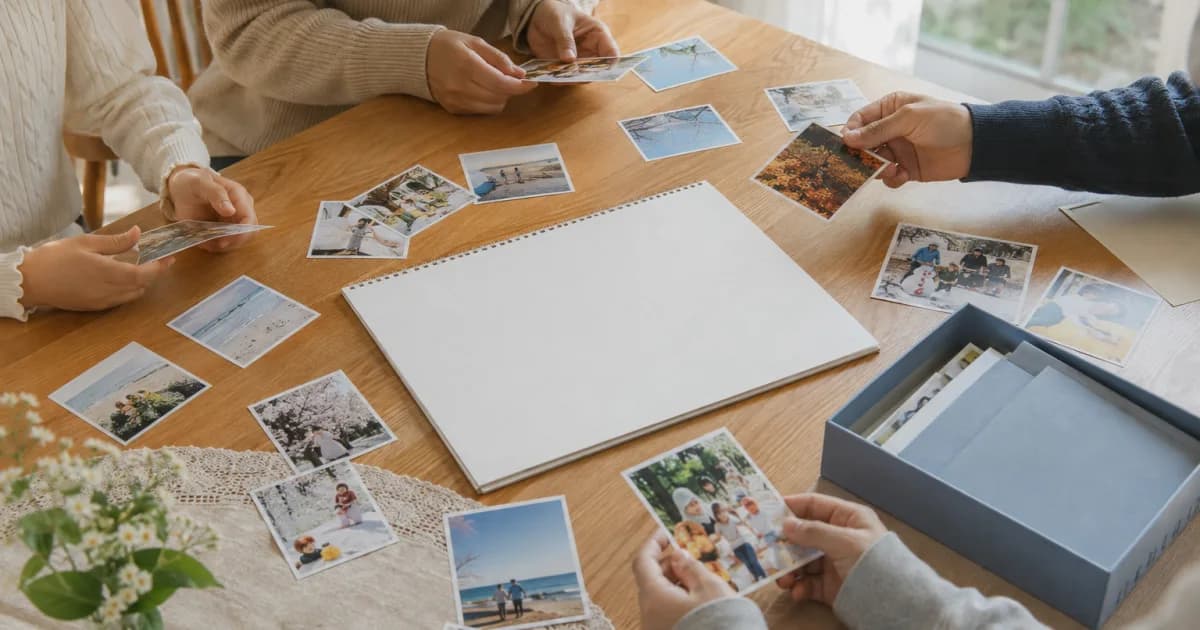
Start with today's conversation instead of an old photo
You do not need old photographs or a precise timeline to record family stories. A meal you cooked together, a tea table, or a walking route can prompt a conversation. Let the photo show the present and the text capture a story from the past that you heard today.
First explain that you would like to make a brief note. Skip subjects the person does not want recorded or discussed. These editorial suggestions are for recording family conversations, not testing someone's memory or collecting every detail.
Ask one question about something in front of you
If ‘What was your childhood like?’ feels too broad, ask about the food or an object nearby. ‘When did you start liking this?’ or ‘Where did you used to eat it?’ can open a conversation. A short answer does not need to become a longer story.
Scene: ask what the surroundings looked like.
Choice: ask whether they remember why they chose that option.
People: ask who was there and whether the story can be recorded.
When to stop: change the subject if they cannot remember or do not want to talk.
Separate the conversation date from the event date
If today's story concerns childhood, do not use today's date as the date of that event. Try ‘Heard from Dad over dinner on September 21. He remembers being school age.’ Leave uncertain years or locations as approximate or unconfirmed.
An editorial example: ‘Over noodles today, I heard about childhood trips to the market. We agreed to check which market another time.’ It establishes the conversation's context without filling gaps. Do not automatically match a year found elsewhere to the remembered event.
Distinguish spoken words from your summary
Writing from memory after a conversation can change the wording or sequence. Unless you are reproducing the words accurately, identify the text as a summary: ‘This was the gist of what they told me.’ Avoid adding feelings or conclusions while smoothing the prose.
You can put the family member's account and your current feelings in separate paragraphs. ‘Mom remembered being busy then’ and ‘I was surprised to hear this for the first time today’ describe different people's experiences. Record what the conversation established instead of interpreting their past emotions for them.
Keep different memories side by side with attribution
One person may remember summer while another remembers winter. Rather than erase one account to produce a seamless story, write ‘Dad remembers summer; my aunt remembers winter.’ This helps prevent a personal note from presenting unverified family history as settled fact.
If someone adds or changes details later, briefly record when and how the account changed. Do not repeatedly question sensitive events just to complete the record. Respect the stories each person agrees to preserve rather than evaluating relationships or explaining why memories differ.
Review the audience and content before sharing
Having a conversation does not mean the story may be shown to every family member. Check the audience, especially for private stories involving others. If possible, show the storyteller your short account and ask whether its meaning changed or anything should be removed.
In Pogaem, save a photo and note on the conversation date. Decide whether the entry belongs in a private or shared record. People may be identifiable from relationships and events in the text even without faces in the photo. A small entry is enough if it tells your future self what you heard and from whom.
Frequently asked questions
Can I record a story if I cannot remember the exact words?
Yes. Say that you summarized the conversation from memory instead of putting it in quotation marks as an exact statement. If possible, read it with the person to check that the meaning is intact.
What if family members remember the same event differently?
Keep their accounts side by side with attribution. Do not combine unverified details into one definitive version. Add later clarifications with the date they were made.
Can I write a family story without a photo of the old event?
Yes. Photograph today's table or walking route and describe the past event in text. Make clear that the current photo and the remembered event belong to different times.