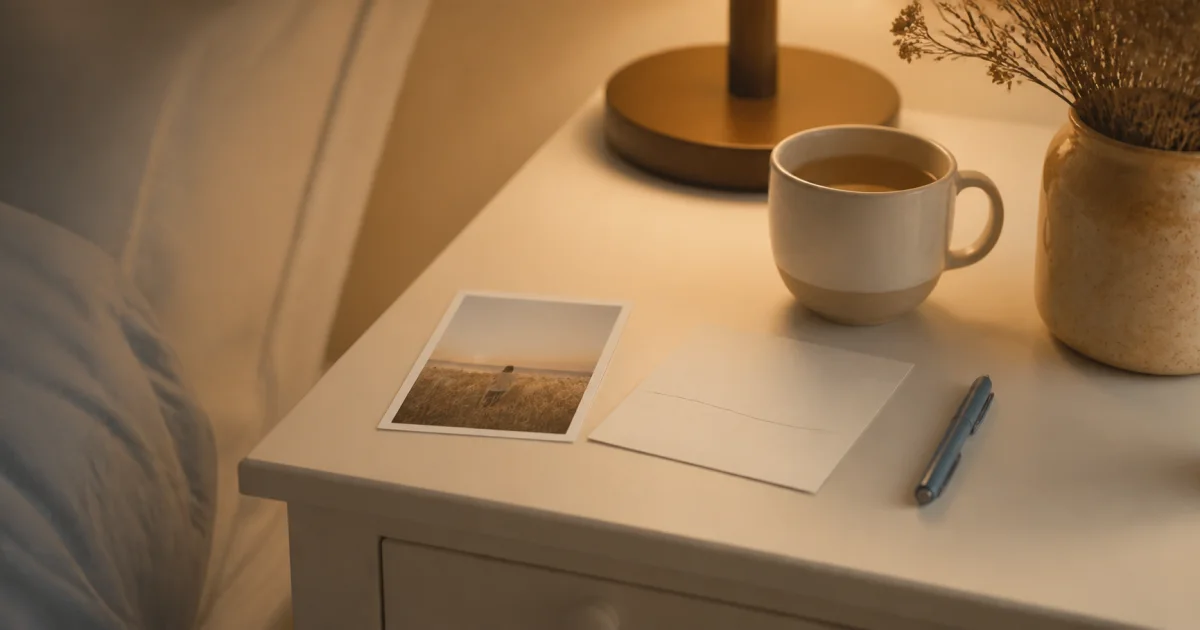
Recall the reason for the photo before describing it
A coffee photo already communicates ‘I drank coffee.’ Instead, recall a long-awaited message or a quiet rest by the window. Diary topics often lie between the visible object and unseen circumstances.
Questions are not homework requiring long answers. Follow another story if it emerges, skip questions without answers, or keep just one photo. These editorial prompts and notes are optional examples, not required fields.
Five questions about ordinary objects
On days at home, notice things you used often: a moved book, an empty plate, or an old key can carry today's story. Photographing actual use may recall context better than arranging a pretty display.
Which object did you reach for most today, and what did you use it for?
Did you newly notice a mark on something you have used for a long time?
What did you move or organize?
Which thing on your desk best represents today?
What were you sorry to finish using or eating?
Five questions about familiar routes
The same path is not always the same, but you need not seek impressive scenery. A changed action such as ‘sat on the bench I always pass for the first time’ is a useful clue. Stop for photos only where you will not obstruct others.
What did you notice for the first time on a familiar route?
If you chose a different path, why?
Did a color or shape make you pause?
What part of home first caught your eye when you returned?
What would you compare if photographing the same place next time?
Five questions about people and conversations
Faces are optional. Side-by-side shoes or food made together can evoke the day. If dialogue is unclear, summarize what you discussed instead of putting remembered meaning in quotation marks as exact speech.
What did you choose together with someone today?
Who was there but absent from the photo?
What conversation topic do you want to remember?
Can you recall a small favor someone did for you?
What story would you tell first if viewing this photo together later?
Five questions about your choices
Reflection does not have to end in self-criticism or a resolution. What you chose and how it felt may help your future self. Describe today's event specifically instead of judgments such as ‘always’ or ‘never.’
What did you do differently from today's plan?
Which choice would you like to make again?
What did you decide not to do?
What preference did you discover about yourself today?
If you could show your future self one of today's photos, which would it be?
One question and one concrete clue are enough
For a desk photo and ‘What did you move?’, try ‘Moved the lamp from the window beside the books. It was less dazzling there in the evening.’ Clarity about an object, action, or reason matters more than length. No impressive conclusion is required.
You can reuse prompts. ‘What would I choose again?’ may describe food one week and a walking time the next. Save the photo and brief answer on its date in Pogaem. Recording only the chosen answer is easier to reread than copying all questions with blank spaces.
Frequently asked questions
Does the topic need to change every day?
No. The same question can produce different observations and answers. Focus on the day's specific clues rather than constantly inventing topics.
What can I write on a day when nothing happened?
Start with small choices: a frequently used object, a changed route, or a meal. If nothing feels worth recording, you can skip the day.
Must I take new photos to answer these questions?
No. Look at today's existing photos and choose a question. Add why you took the picture or what was happening instead of listing visible details.