Consider which process feels comfortable
Neither paper nor digital is guaranteed to last longer. Someone who enjoys printing and pasting photos has different needs from someone who writes notes on a phone while traveling. Imagine the act of recording, not just the finished diary.
‘Decorate a page at the desk on weekends’ and ‘choose today's photos before bed’ are different routines. First write down where and when you will record instead of making a shopping list. This article offers selection criteria, not product recommendations or a cost comparison.
Consider the process of completing a paper page
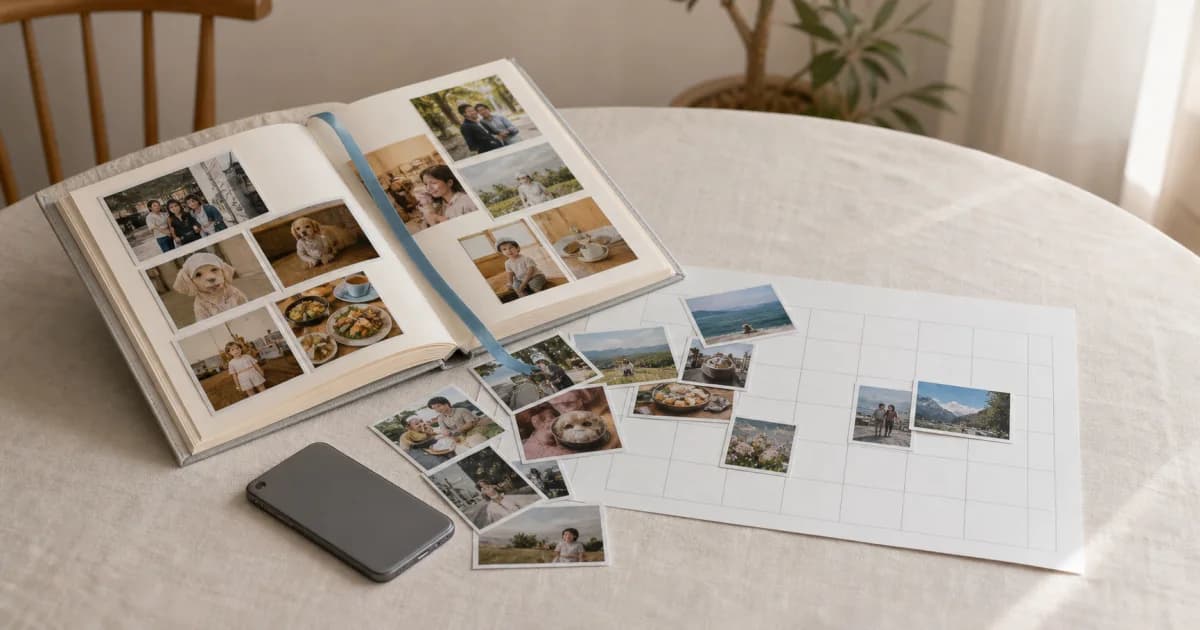
In a paper diary, print size, layout, and handwriting become part of the page. Tickets and small notes can join them. Selecting prints and gathering supplies adds preparation; try it to see whether that is enjoyable or makes you postpone writing.
Changing photo order or revising old text differs from digital editing. Decide whether to add notes in the margins or attach another slip. If every page feels as though it must be perfect, separate draft notes from finished pages.
Test adding and reopening digital entries
A digital diary can begin by connecting photos already on your device with text. A tool such as Pogaem groups photos and notes by date so you can reopen past dates and read their entries. Editing, search, and export features differ between apps.
Try swiping through several photos and reading longer text on screen. Having material on a phone does not complete long-term preservation. Include checking synchronization and separate storage arrangements in your decision.
Compare days with many photos and days with one
Printing ten photos a day requires more space and preparation. Saving many digital photos still leaves you deciding what to revisit. In either medium, more pictures do not automatically make a better record. First decide how many scenes matter.
For example, keep a whole trip digitally by date, then make one paper page for its most memorable day. This does not mean recording every photo twice. It is an editorial example of assigning different roles to reduce duplicated effort.
Choose a primary record and storage locations if using both
If dates or descriptions differ between the two, you may later wonder which is correct. Choose one as the primary source for event dates and detailed accounts, and use the other for summaries or selected scenes. When correcting facts later, check whether the other record also needs updating.
Add a date and recognizable title to paper pages.
Note the paper diary's name or volume in digital entries to connect them.
When photographing an important paper page, check that small text is readable.
Remember that a page photo does not replace its texture or every detail.
Reread after a week before deciding
Before buying many supplies, try both approaches with a few existing photos. Consider enjoyment while writing, preparation effort, and ease of finding the entry later as separate questions. The two versions need not match in length or appearance.
You can keep one method or continue dividing their roles. Your choice may change with seasons or living circumstances. What matters is knowing where the record is and understanding its story when you open it again.
Frequently asked questions
Is using both paper and an app redundant?
Give them different roles, such as a complete record and a summary of selected scenes. Decide which holds the primary dates and detailed descriptions.
Does photographing a paper diary count as a backup?
It helps preserve a readable copy but does not capture every property of the original. Check for missing pages, legible small text, and a known file-storage location.
Is a digital photo diary always cheaper?
Costs depend on printing volume, supplies, app fees, and storage terms. This article does not rank costs; check the actual conditions before choosing.