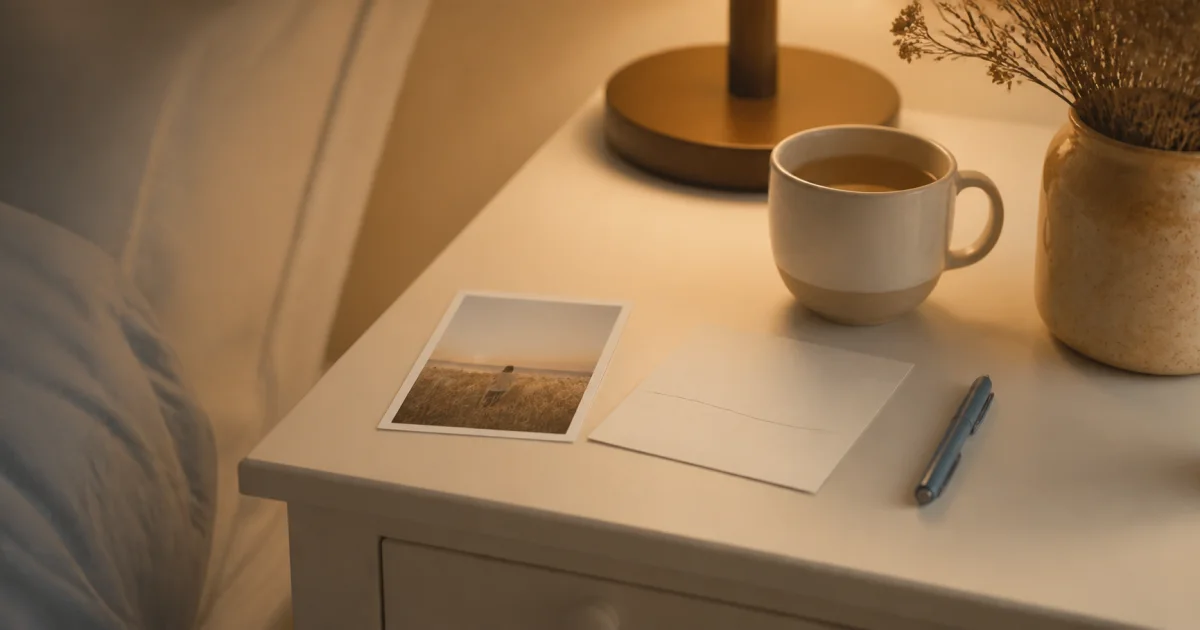
Make today the restart date
After a long break, empty calendar squares may stand out first. You do not have to reconstruct them all before writing today. Save one current photo and a short sentence, treating past organization and future recording as separate tasks.
Without a photo today, write why you want to restart: ‘Finding my holiday photos made me begin again.’ That is an entry too. Treat recorded days as small guides back to memories rather than empty days as failures.
Narrow old photos to one event
Instead of reviewing an entire month from start to finish, choose a bounded event: a recent weekend, family meal, or short trip. A clear endpoint prevents the scope from expanding. Organizing one day and stopping still completes that record.
You need not decide every photo's future at once. Choose diary scenes now and postpone deleting other phone photos. Separating selection from deletion reduces pressure to remove important originals hastily.
Scope now: state a beginning and end, such as last Saturday afternoon.
What to keep: choose clear memories and known facts.
What to defer: leave whole-gallery deletion and filling every gap for separate decisions.
Separate capture day from writing day
The shooting and writing dates may differ. Check whether an image is an original or received through messaging, and whether its metadata fits your memory. A file date alone does not establish all the circumstances.
For example: ‘Photo from August 15, organized September 10. The day we had lunch by the sea.’ This separates the event from the reflection. Even when placing a Pogaem entry on the old date, noting the writing date can prevent later confusion.
Write confirmed facts and vague memories separately
Record only verified details about food, companions, or places. ‘Maybe just after the rain stopped’ is a guess; ‘the photo shows a wet path’ is an observation. Separating them makes later corrections easier.
If past feelings are unclear, record your current response. Instead of deciding ‘I was happy then,’ write ‘Looking now, both expressions seem relaxed.’ The key is not presenting reconstructed dialogue or estimated dates as confirmed information.
Give each organizing session an ending
This sequence is not a race to finish the backlog. It creates an endpoint so starting does not feel like a commitment to organize every photo. Even if you stop before the chosen scope is complete, knowing where to resume is enough.
Record today first to establish the restart.
Choose one past event and define the scope.
Add clear, distinct scenes to the diary.
Separate capture timing, today's organizing date, and uncertainty in notes.
Stop before browsing more photos and leave only the next event's name for later.
Choose a rule that lets you resume after another pause
If daily writing did not suit you, choose weekly scenes on weekends instead. Try ‘record when there is a scene worth remembering’ rather than targets for photo counts or streaks. Leaving gaps is also a valid choice of method.
Do not repeat a backlog list in every diary entry. Keep one next event in a separate note and continue current recording. Another break need not create a rule requiring you to backfill from the day after your last entry.
Frequently asked questions
Must I fill every missed day in order?
No. Write today first and choose only past events you remember clearly. The aim is meaningful scenes and context, not filled squares.
Which date should I use if metadata conflicts with memory?
Check the original status and photo information. If uncertain, say so in the note. Do not treat a file date or guess as a confirmed capture date.
What if I cannot remember my old feelings?
Record circumstances you know and identify your response to the photo as a present reflection. There is no need to invent plausible past emotions.