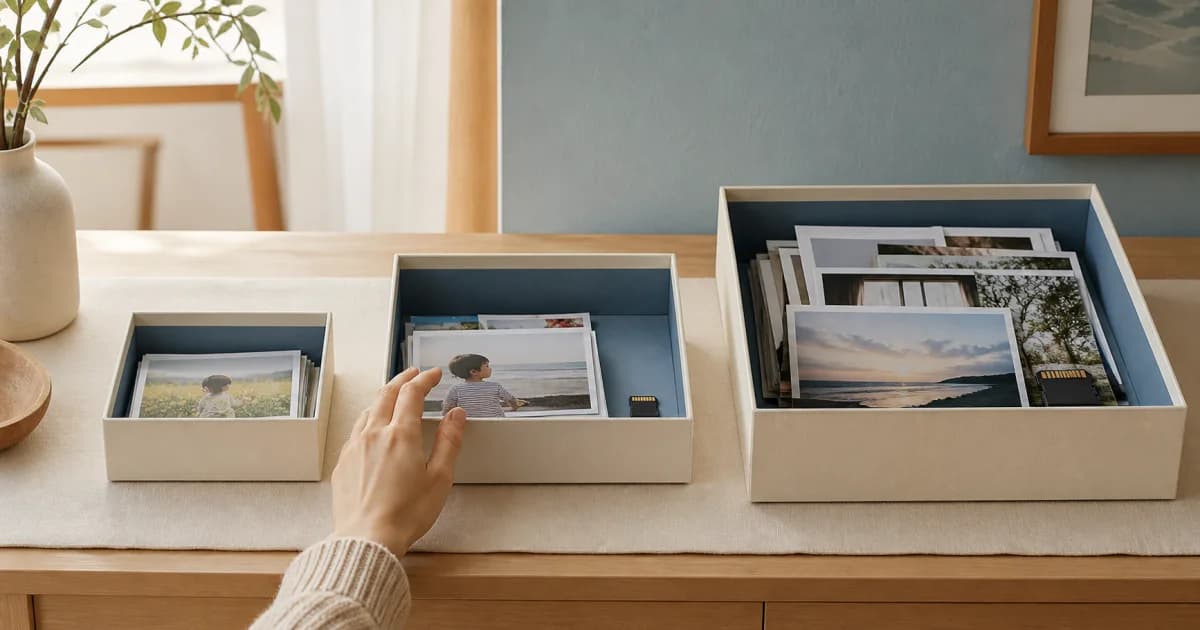
Give room photos and box photos different purposes
During a move, you may need to know both where an item was packed and how it used to be arranged. A whole-room photo rarely reveals box contents, while a close-up may not indicate its destination. Record layouts and contents as separate photo roles.
The goal is finding personal belongings and revisiting changes in your living space. This article does not assess legal evidence or advise on contractual disputes. Defining the purpose helps avoid recording unnecessary documents and details.
Choose simple box names before packing
Label boxes ‘Kitchen A’ or ‘Desk B’ and repeat those names in notes. Separate short identifiers from detailed contents instead of making long names. Home addresses and personal names are unnecessary identifiers.
For mixed contents, note the exception: ‘Desk B: stationery and spare cables.’ Ensure later boxes have distinct labels. Matching a readable photo label with the actual box matters more than taking many pictures.
Take one photo before closing and add one retrieval clue
Before sealing, photograph contents from above and note items you expect to seek. You need not count everything or build a full inventory. If an important item is hidden below, add ‘charger pouch at the bottom.’
For example: ‘Desk B: stationery organizer, notebooks, cable pouch. Place near the workspace after arrival.’ Separate handling instructions for others from private details. Remove personal documents and screens showing account information before photographing contents.
Identifier: match the actual box label to the note.
Contents: name important items hard to recognize from the photo.
Position: explain where an item sits inside if needed.
Arrival: note the destination room without an exact address.
Choose room views and useful arrangement clues
Before moving, photograph frequently used spaces and arrangements worth recreating, such as shelf order or desk storage. Do not treat photos as a substitute for professional electrical, gas, or other installation work.
At the new home, choose meaningful stages: before belongings arrive, after large items are placed, and after adjustments during daily use. Similar angles help comparison, but do not obstruct moving or strain to duplicate the composition. Notes can explain where things moved.
Check private clues before taking photos
Home images contain more information than expected. Look for door codes, detailed keys, shipping addresses, and work screens irrelevant to the diary. Removing documents or labels first reduces details missed during later sharing.
Before photographing family members' or housemates' rooms and belongings, discuss what you will record and who will see it. Separate private images from outgoing copies, excluding exact move schedules and new-home details. Recheck the background before sending.
Finish with the new location after unpacking
Old box photos can misleadingly suggest the contents are still there. Add ‘Unpacked; cable pouch moved to the storage box under the desk.’ A new-location photo can distinguish temporary moving storage from the settled arrangement.
In Pogaem, record packing and organizing days with photos and notes to show the sequence. You need not keep managing every step after the move; retain useful retrieval clues and meaningful room changes. Success means recognizing where needed items are today, not maximizing photo count.
Frequently asked questions
Must I photograph every box in detail?
No. Start with boxes or belongings likely to be hard to find. Connecting the label, main contents, and destination gives useful organizing clues.
Should I include the new home's address?
An exact address is not essential for a personal box-finding record. Use room and storage identifiers, and check that shipping labels and access information are hidden.
How should I update the record after unpacking?
Add completion status and the item's new location. Distinguish temporary box storage from the current living arrangement to avoid confusion from old photos.