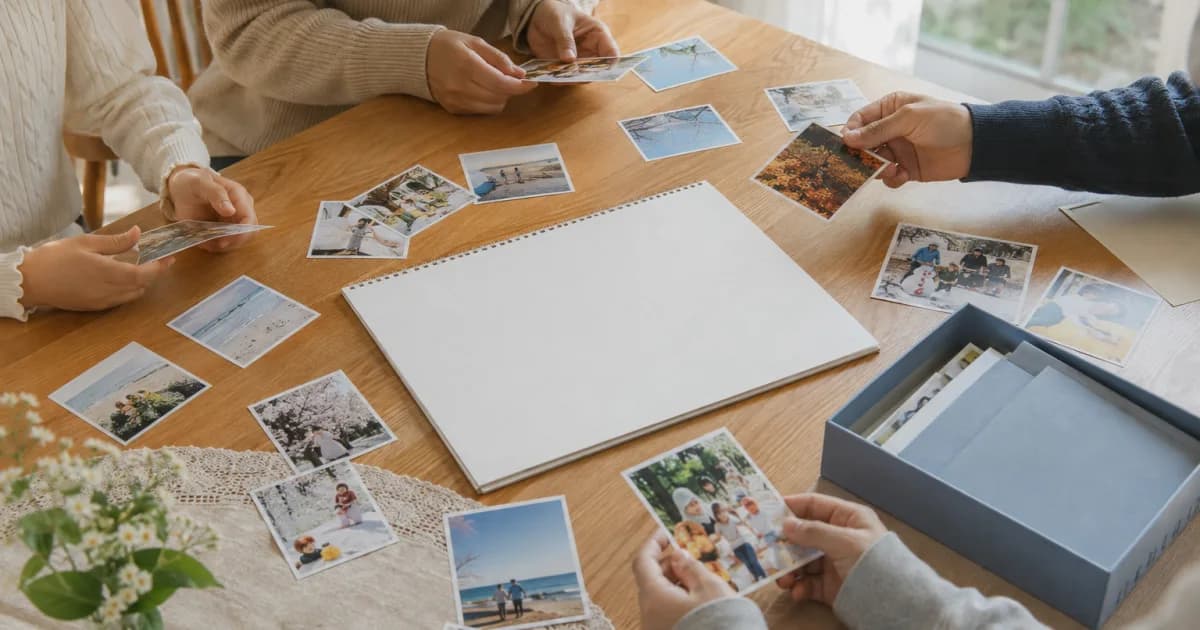
Start with one small group instead of the whole box
Spreading all photos at once can mix originally separate envelopes. Choose a bounded group such as one album spread or envelope and record its arrangement before removing anything. Being stored together may itself suggest a period or event.
You need not date everything and create digital copies in the same session. First preserve location and front-and-back views. Do not force stuck or fragile photos out of an album; record what is currently visible.
Connect front and back with one identifier
Assign a temporary number and use it for both digital sides, such as ‘FamilyBoxA-01-front’ and ‘FamilyBoxA-01-back.’ Use a separate list and filenames rather than adding marks to originals that might obscure existing traces.
Backs may contain dates, names, places, and printing information with different meanings. Transcribe only readable text and mark unclear parts with a question mark or ‘illegible.’ Do not assume every written date is the capture date; note how far its meaning is confirmed.
Separate facts, family memories, and estimates
Written notes and relatives' accounts may differ. Preserve them side by side as different sources instead of immediately correcting one: ‘Back says spring; family remembers an autumn trip.’ This makes unresolved details visible.
Give estimated periods as ranges, such as ‘possibly the 1980s,’ and explain whether the basis is clothing or proximity to dated photos. Note who shared a memory and when as needed for later questions. Do not assign an unconfirmed name to a person as fact.
Directly observed: ‘A place name is written on the back.’
Reported: ‘A relative remembers this as outside a family member's house.’
Estimated: ‘Likely a similar period because it was in the same envelope,’ with the limits stated.
Ask relatives for a scene's story rather than the right answer
Immediately asking someone to name a year may feel like a memory test. Start with who took the picture, the occasion, or whether the place was familiar. ‘I don't know’ also identifies a question for later checking.
Different memories need not merge into one smooth story. Attribute each briefly, and do not place unverifiable conversations in quotation marks as exact speech. Discuss the audience before showing photos or private family stories to others.
Make digital copies traceable to originals
Do not discard originals immediately after copying. Original arrangements or physical prints may hold clues beyond front and back. If using a cropped or adjusted version in the diary, keep a full-view copy separately and record its source file.
Name the envelope or album group and record its current location.
Connect the front and accessible back with the same identifier.
Open files and check that important scenes and notes are readable.
Record certainty and sources for people, places, and dates in separate notes.
Keep each print connected to its original group and check separate storage of digital files.
Record unknown dates as unknown
A calendar requires a selected day, but old photos do not always have known capture dates. If initially placing one on the organizing date, write ‘Capture date unknown; organized from the family box today.’ Do not present a temporary date as the actual birthday or event date.
Pogaem can keep multiple photos and notes together so front-and-back clues remain in one entry. Add what family members confirm gradually instead of expecting automatic identification of people or periods. When new clues appear, briefly state how they changed earlier estimates.
Frequently asked questions
Can I organize photos without exact capture dates?
Yes. Mark unknown dates or estimated ranges and begin with original locations and front-and-back clues. Explain whether the selected calendar date is actual or only for organizing.
What if relatives remember different dates?
Preserve each recollection and source rather than forcing one answer. Keep directly observed clues separate and add later confirmations.
Is a front-only copy enough?
If the back has dates, names, or places, record it too. A shared identifier for both sides makes it easier to connect the information later.